
Few digital roadblocks are as frustrating as trying to access your bank, email, or work account, only to be stopped by a blank screen reading ERR_TOO_MANY_REDIRECTS or “The page isn’t redirecting properly.” Instead of loading your account dashboard, your browser gets stuck in an infinite loop, constantly passing your request back and forth without reaching a destination.
At Easy Login Hub, we understand how disruptive access errors can be to your daily routine. We create structured login guides and deliver actionable technical support to help users troubleshoot common login problems quickly and securely. In this comprehensive step-by-step Login Guide, we will explain why redirect loops occur specifically on authentication portals and provide proven solutions to restore access to your online accounts.
Disclaimer: EasyLoginHub is an independent informational resource. The login guides, troubleshooting strategies, and account recovery assistance provided on this site are for educational purposes. Easy Login Hub is not affiliated with, endorsed by, or connected to any third-party brands, platforms, or service providers mentioned in our guides.
Understanding the ‘Too Many Redirects’ Loop on Login Portals
To fix the ERR_TOO_MANY_REDIRECTS error, it helps to understand what is happening behind the scenes. A redirect occurs when a web server sends your browser from one web address (URL) to another. This is common on login pages. For example, if you try to visit an account dashboard while logged out, the server redirects you to the portal’s sign-in page.
A redirect loop happens when URL A directs your browser to URL B, but URL B immediately directs you back to URL A—or through a series of intermediate URLs that circle back to the beginning. When your web browser detects that it has been redirected multiple times without reaching a stable landing page, it stops loading and displays an error message to prevent your device from crashing or wasting bandwidth.
Why Does This Error Frequently Target Login Pages?
Authentication portals rely heavily on dynamic session verification. Several unique factors make login portals especially prone to redirect loops:
- Conflicting Cookie States: Your browser may hold an outdated session cookie that says you are logged in, while the server believes your session has expired, resulting in an endless loop between the login page and the dashboard.
- HTTPS Security Misconfigurations: Secure websites require encrypted connections. If a login page switches between
http://andhttps://due to server configuration issues, a loop can form. - Single Sign-On (SSO) & OAuth Handshake Failures: When signing in via third-party identity providers (such as Google, Microsoft, or Apple), miscommunicated authentication tokens can cause persistent redirect loops.
- Browser Extensions & Ad Blockers: Security or privacy add-ons often block authentication scripts or tracking tokens necessary for modern login flows.
Step-by-Step Troubleshooting Guide to Fix Redirect Loops
Follow these practical troubleshooting steps in order. They start with quick, local browser fixes and progress toward advanced network diagnostics.
Step 1: Open the Login Page in Incognito / Private Mode
The fastest way to determine whether the redirect issue stems from stored browser data or the host website is to open an incognito or private browsing window.
- Google Chrome / Brave / Edge: Press
Ctrl + Shift + N(Windows) orCmd + Shift + N(Mac). - Mozilla Firefox: Press
Ctrl + Shift + P(Windows) orCmd + Shift + P(Mac). - Safari: Press
Cmd + Shift + N.
Attempt to sign in to your account from this private window. If the login page loads normally and allows you to sign in, the error is caused by corrupted cookies, cached files, or browser extensions on your main browser profile.
Step 2: Clear Browser Cookies and Cache for the Specific Website
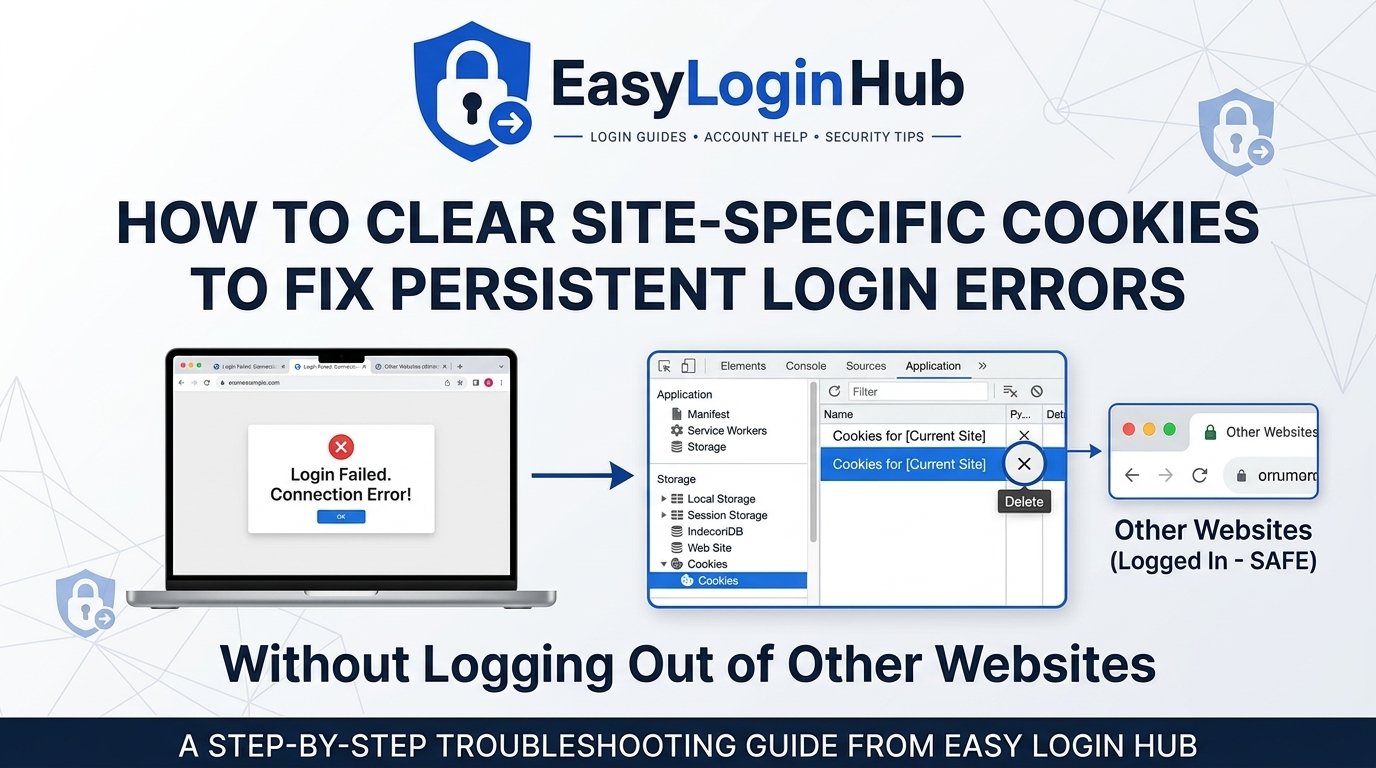
Corrupted or outdated session cookies are the leading cause of account-level redirect loops. While you can clear your entire browser history, clearing data specifically for the affected domain preserves your saved passwords and sessions on other sites.
How to Clear Specific Site Data in Google Chrome:
- Click the padlock or view site information icon located on the left side of the address bar while visiting the problematic login page.
- Select Site settings or Cookies and site data.
- Click Manage on-device site data or Delete data.
- Confirm the deletion, close all browser tabs for that website, and reopen the page.
Clearing All Browsing Data (Universal Solution):
If clearing specific site data does not resolve the loop, navigate to your browser’s Privacy & Security settings, select Clear Browsing Data, choose Cookies and other site data along with Cached images and files, set the time range to All time, and click Clear Data.
Step 3: Check System Date and Time Settings
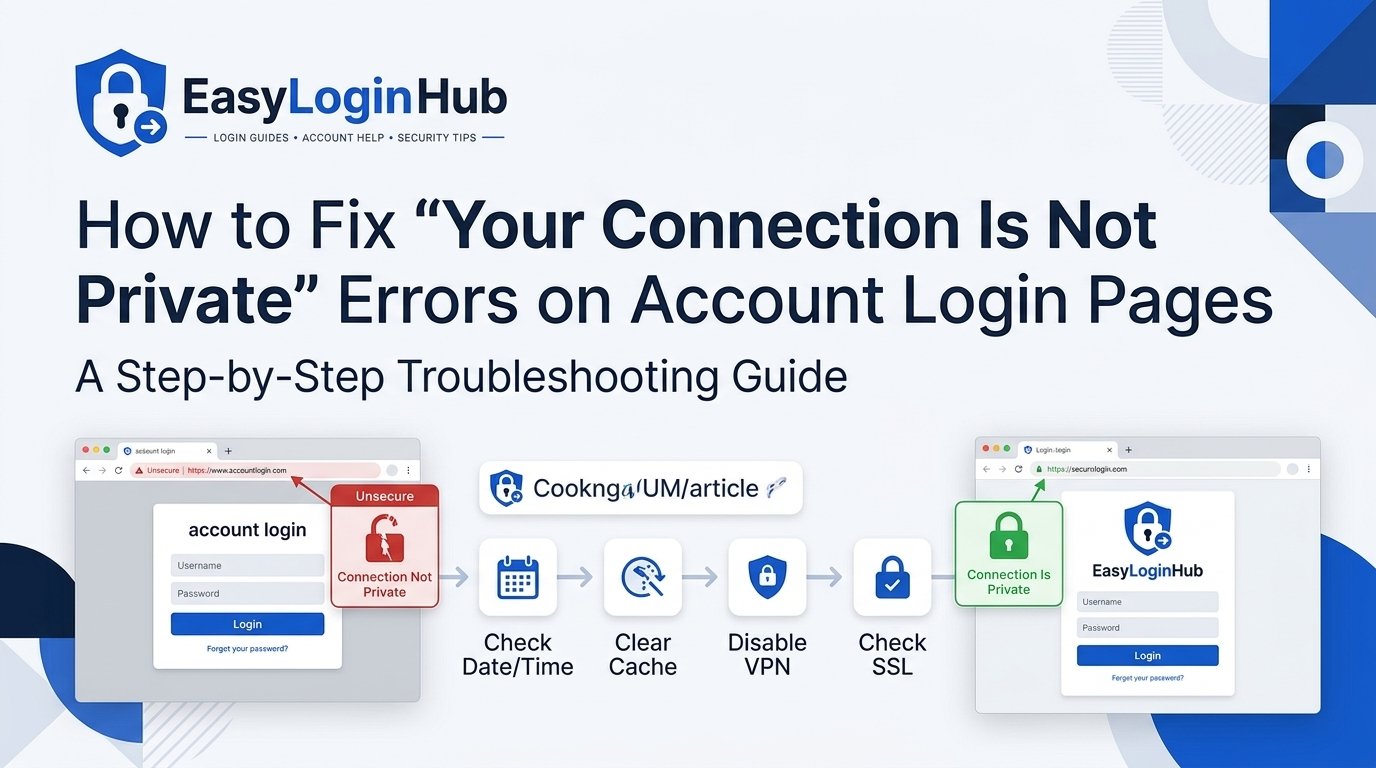
Security protocols and SSL/TLS encryption certificates rely heavily on precise timestamps. If your computer or smartphone’s date and time are incorrect, your browser may evaluate authentication tokens as invalid or expired, triggering repeated redirect loops during sign-in.
- Windows: Go to Settings > Time & Language > Date & time. Enable Set time automatically and click Sync now.
- macOS: Open System Settings > General > Date & Time. Ensure Set date and time automatically is toggled on.
- iOS / Android: Open system settings, find Date & Time, and enable automatic network time syncing.
Step 4: Disable Conflicting Browser Extensions
Certain browser extensions—particularly ad blockers, VPN extensions, script managers, and privacy guard tools—can alter network headers or block security scripts required for modern multi-factor authentication (MFA) and account sign-in processes.
- Open your browser’s Extension / Add-on Management page (e.g.,
chrome://extensions/in Chrome). - Temporarily toggle off all active extensions.
- Restart your browser and attempt to access the account login page again.
- If the sign-in works, turn your extensions back on one by one to identify which one caused the conflict.
Step 5: Flush Your Local DNS Cache
An outdated or corrupted Domain Name System (DNS) cache on your device can cause your internet connection to direct traffic to incorrect server IP addresses, resulting in a redirect loop.
Flushing DNS on Windows:
- Press the Windows Key, type
cmd, right-click Command Prompt, and select Run as administrator. - Type the following command and press Enter:
ipconfig /flushdns - You should see a confirmation message stating that the DNS Resolver Cache was successfully flushed.
Flushing DNS on macOS:
- Open Terminal (found via Finder > Applications > Utilities).
- Type
sudo dscacheutil -flushcache; sudo killall -HUP mDNSResponderand press Enter. - Enter your administrator password when prompted.
Step 6: Verify Network and Proxy Settings
If you are connected to a corporate VPN, proxy network, or public Wi-Fi hotspot with a captive portal, your connection routing might be altered. Try turning off your VPN client or switching to a different network (such as a mobile cellular hotspot) to verify whether local network rules are causing the login redirect error.
Server-Side Issues: What to Do When the Issue Isn’t on Your End
If you have completed all the troubleshooting steps above and the ERR_TOO_MANY_REDIRECTS error continues, the problem likely stems from a server-side misconfiguration on the service provider’s end. Common backend issues include:
- Misconfigured
.htaccessor NGINX rewrite rules on the host server. - Misconfigured SSL certificates or CDN (Content Delivery Network) SSL options (such as Flexible SSL misalignments).
- Unannounced server maintenance or temporary outages during database migrations.
Actions You Can Take for Server-Side Errors:
- Check Platform Status Pages: Check the official service status page or third-party outage tracking tools to see if other users are reporting login access outages.
- Contact Customer Support: Reach out to the platform’s official support channels and report the
ERR_TOO_MANY_REDIRECTSerror on their sign-in page. - Utilize Mobile Apps or Alternative Portals: In many cases, official native mobile applications or web portals built for mobile devices bypass web-based authentication loops.
Summary Troubleshooting Checklist
| Troubleshooting Action | Primary Cause Targeted | Success Rate |
|---|---|---|
| Incognito Mode Test | Browser cache / Extension conflicts | High |
| Clear Cookies & Cache | Expired session tokens / Bad login cookies | Very High |
| Disable Browser Add-ons | Blocked authentication scripts | Medium |
| System Time Sync | SSL/TLS certificate handshake failure | Medium |
| Flush DNS Cache | Outdated IP routing tables | Moderate |
Frequently Asked Questions (FAQs)
Does ERR_TOO_MANY_REDIRECTS mean my account was hacked?
No. The ERR_TOO_MANY_REDIRECTS error is a technical communication fault between your browser and the website’s server. It does not indicate that your account credentials have been compromised or breached.
Why does this redirect error only happen on the login page and not the home page?
Public home pages display static content that does not require user validation. Login pages dynamically verify user credentials, cross-check active session cookies, and enforce encrypted security redirects (HTTPS). Because authentication requires multiple authentication checks, sign-in pages are significantly more vulnerable to redirect misconfigurations.
What should I do if I cannot bypass the login error and need urgent account access?
If you need immediate access, try logging in using an alternative web browser (such as switching from Chrome to Firefox), accessing the platform through its official mobile smartphone application, or connecting through a cellular data network instead of local Wi-Fi.
Final Thoughts
Encountering the ‘Too Many Redirects’ error during sign-in can feel like a major hurdle, but it is usually caused by simple client-side issues like stale cookies or outdated cached files. By systematically clearing your browser data, checking system clock synchronization, and testing in private browsing modes, you can quickly resolve the loop and regain access to your account.
For more detailed technical guides, step-by-step account access instructions, and reliable account recovery assistance across popular online services, explore the comprehensive resources available on Easy Login Hub.