
Disclaimer: Easy Login Hub is an independent educational platform providing technical guidance and online safety resources. EasyLoginHub is not affiliated with, sponsored by, or endorsed by any third-party password manager services mentioned in this guide.
Password managers are designed to simplify digital life by storing hundreds of complex passwords behind a single, ultra-secure master password. However, this convenience creates a major predicament when that single key is forgotten. Because modern password managers prioritize security above all else, locked-out users often face a strict recovery process.
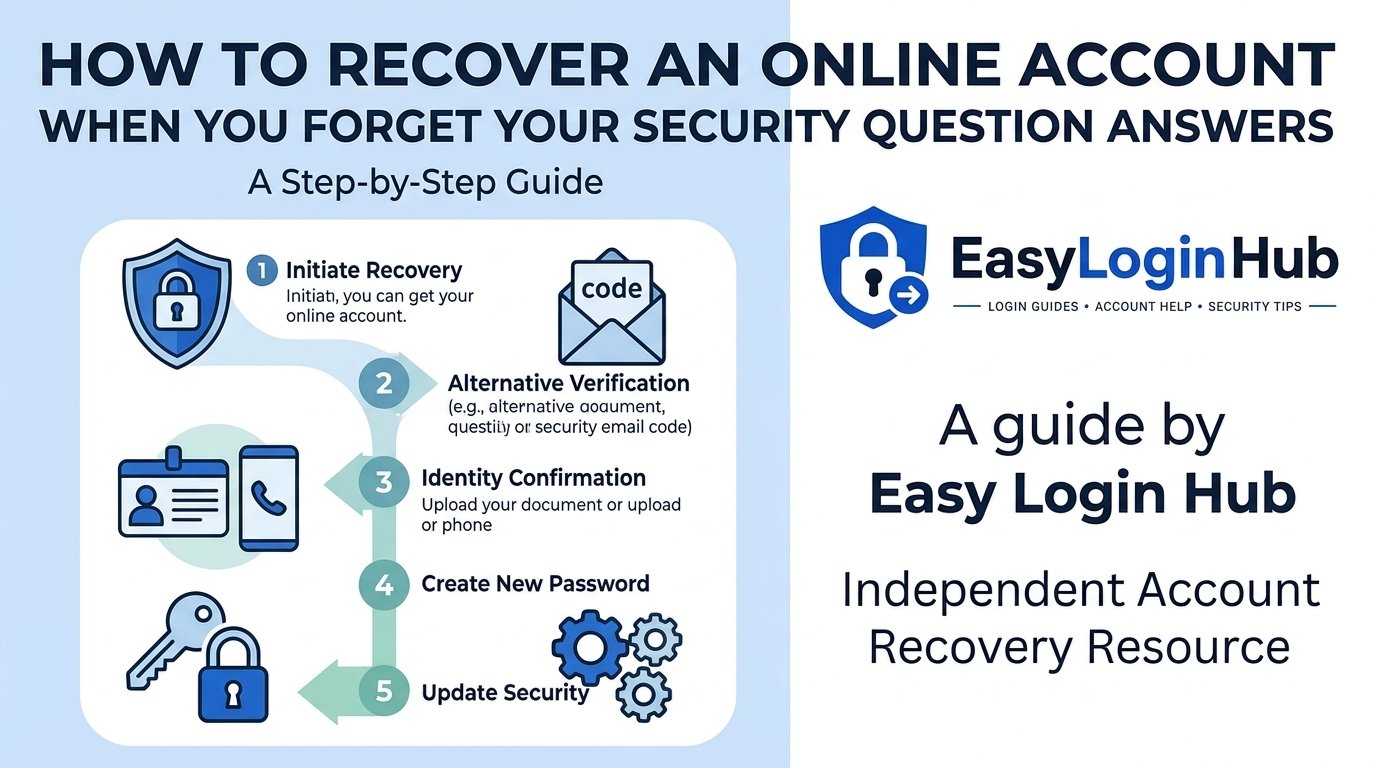
If you find yourself locked out of your vault, do not panic. While regaining access requires specific tools and precautions, several methods can help you recover your account or retrieve stored data. This Login Guide walks you through the step-by-step process of recovering access to your password manager when you forget your master password.
Understanding Zero-Knowledge Encryption
Before attempting recovery, it helps to understand why resetting a master password differs from resetting a standard social media or email account password. Most reputable password managers use a security model known as zero-knowledge architecture.
Under this system:
- Your master password is never transmitted to or stored on the provider’s servers.
- Your vault data is encrypted locally on your device using a key derived from your master password.
- The service provider does not possess a master reset key to open your vault for you.
Because the company hosting your vault cannot read your data, customer support agents usually cannot manually change your password or email you a plain-text reminder. Recovery depends entirely on options set up prior to losing access or fallback access mechanisms built into your devices.
Step 1: Try Alternative Unlock Methods (Biometrics & Secondary Devices)
Before starting a formal account recovery process, check whether active sessions or alternative authentication methods are available on your secondary devices.
1. Mobile Biometrics (Face ID / Fingerprint)
If you enabled biometric authentication on a smartphone or tablet, open your password manager app. Many services allow users to unlock the local database using biometrics even if the master password isn’t recognized immediately. Once inside:
- Export an unencrypted backup (such as a CSV or JSON file) immediately to a secure, temporary location.
- View critical account passwords manually and store them safely while you resolve your master password issue.
2. Browser Extensions and Desktop Apps
Check all computers and web browsers where you previously installed the password manager extension or desktop application. If a session is still active or cached in memory, you might be able to view individual credentials or initiate a password change directly within the app settings.
Step 2: Locate Your Recovery Key or Emergency Kit
During the initial account setup, most password manager services prompt users to generate and save a physical or digital recovery document (often called a Secret Key, Emergency Kit, or Recovery Code).
If you need expert account recovery assistance, locating this code is usually the single most effective resolution path. Here is where to check:
- Downloads Folder: Search your primary computer for PDF or text files containing phrases like “Emergency Kit,” “Recovery Code,” or the name of your password manager service.
- Physical Documents: Look through home files, safes, or physical notebooks where you print critical security credentials.
- Cloud Storage: Search encrypted cloud folders (such as Google Drive, OneDrive, or iCloud) for saved backup documents created when you registered.
When located, follow the on-screen prompt on your password manager’s recovery landing page to input this unique key alongside your account email address. This key acts as a cryptographic fallback to decrypt your data and allow master password creation.
Step 3: Utilize Emergency Access or Family Recovery Options
Many modern password managers offer collaborative security features designed specifically for situations where a primary user loses access.
1. Emergency Contacts
If you previously configured an “Emergency Access” contact (such as a trusted family member, colleague, or partner):
- Log into the web portal of your password manager from an unrecognized browser or select the Emergency Access option on the sign-in page.
- Submit an emergency access request targeting your designated contact.
- Your contact will receive a notification to grant access. Depending on your pre-set waiting period (e.g., immediate, 24 hours, or 7 days), access will be granted once they approve it or once the waiting period expires.
2. Family or Business Plan Administrators
If your account operates under a Family or Enterprise subscription, contact the account administrator. Plan administrators often have access to admin-driven account recovery policies. While they cannot view your private vault items, administrative tools can securely reset access permissions and send an account restoration link directly to your inbox.
Step 4: Check for One-Time Hints or Mobile Recovery Tokens
If you do not have an active session or a physical emergency kit, check if your specific password manager supports secondary verification tokens:
- Master Password Hints: Review the hint you created during initial setup. When attempting to log in on a primary browser, click “Show Hint.” Sometimes a brief memory trigger is all that is required.
- Mobile Master Password Reset: Some mobile operating systems store cryptographic tokens in secure hardware (like the iOS Secure Enclave or Android Keystore). If enabled, navigating to settings within the mobile application may offer an option to reset the master password using hardware authentication.
Step 5: What to Do If Vault Access Cannot Be Restored
If you lack a recovery key, have no biometric access, have not set up emergency contacts, and cannot recall the master password, zero-knowledge encryption prevents the recovery of that specific encrypted vault. In this event, you must perform an account reset to regain access to the platform.
To troubleshoot common login problems of this nature:
- Initiate a factory account reset via the password manager’s website. This action permanently deletes existing encrypted vault items while keeping your subscription and account email active.
- Create a brand-new master password, taking care to write down the new emergency recovery code immediately.
- Manually rebuild your database by utilizing “Forgot Password” prompts on individual online accounts (email, banking, social media) to store updated login details in your fresh vault.
Best Practices to Prevent Future Master Password Lockouts
Experiencing a master password lockout highlights the importance of multi-layered backup routines. Implement these protective measures to prevent future incidents:
- Print Your Emergency Kit: Keep a physical copy of your secret keys and account recovery details stored inside a secure fireproof box or safe.
- Use a Memorable Passphrase: Rather than using random symbols that are easy to forget, construct a passphrase using four or five random words separated by space or symbols (e.g.,
correct-horse-battery-staple). - Designate an Emergency Access Contact: Assign a trusted family member or close friend as an emergency recipient within your password manager settings.
- Perform Regular Backups: Periodically export an encrypted backup file of your vault and save it to an encrypted external drive.
Final Thoughts
Forgetting a master password can be stressful, but systematic troubleshooting often reveals alternative avenues of access—from cached mobile sessions to printed recovery keys and family plan administrative resets. Taking preemptive action today ensures that your credentials remain secure yet accessible whenever you need them.
For additional step-by-step account recovery assistance, troubleshooting tips, and security insights, visit Easy Login Hub to explore our complete collection of practical login guides.