
You sit down at a coffee shop, airport terminal, or hotel lobby, connect your laptop or smartphone to the local network, and wait for the Wi-Fi splash page to appear. Your device shows full Wi-Fi bars, but the browser displays a blank screen, a connection timeout error, or simply refuses to open the network’s landing page. Without agreeing to the terms or entering access credentials on that screen, you remain stuck online without actual internet connectivity.
This redirected landing screen is known as a captive portal. When it fails to trigger automatically, accessing the internet becomes impossible. At Easy Login Hub, we regularly help users troubleshoot common login problems across various networks and services. In this comprehensive guide, you will learn why captive portal login pages freeze or fail to pop up, alongside step-by-step instructions to force the page to load on Windows, macOS, iOS, and Android devices.
What Is a Wi-Fi Captive Portal and Why Does It Fail to Load?
A captive portal is a Web page that users are forced to view and interact with before granted broader access to a public Wi-Fi network. Businesses use these portals to authenticate guests, present terms of service, collect user details, or request payment for connection time.
When your device connects to a network with a captive portal, operating systems typically send a background request to an unencrypted HTTP URL (such as a device check domain). If the router intercepts this request, it redirects your browser to the local login portal. However, several configuration issues can break this redirect cycle:
- HTTPS and HSTS Enforcement: Modern web browsers prioritize encrypted connections (HTTPS). If your browser default home page or saved tab enforces strict HTTPS or HSTS (HTTP Strict Transport Security), the browser will block the unencrypted redirect attempt from the router for security reasons.
- Custom DNS Configurations: Using third-party DNS services like Google Public DNS (8.8.8.8) or Cloudflare DNS (1.1.1.1) prevents your device from recognizing the local network router’s internal server address.
- Active Virtual Private Networks (VPNs): VPNs encrypt and re-route your traffic immediately, bypassing local router interception scripts required to display captive portals.
- Browser Caching and Cookies: Stored session data or corrupt network caches can confuse the browser when redirecting to a new local network address.
- Ad Blockers and Extension Conflicts: Content blockers and strict privacy extensions may flag portal redirect scripts as malicious pop-ups or tracker scripts.
Step-by-Step Solutions to Fix Captive Portal Login Pages
If you are stuck on a public Wi-Fi network that shows a connected status without internet access, follow these actionable troubleshooting steps in order.
1. Force an Unencrypted HTTP Connection
Because modern browsers automatically upgrade web addresses to secure HTTPS connections, the public router may fail to inject its login page. Forcing an unencrypted (HTTP) connection triggers the router’s redirect mechanism.
- Open your preferred web browser.
- Type an unencrypted domain into the address bar, such as
http://neverssl.com,http://example.com, orhttp://http.badssl.com. - Alternatively, type a raw non-secure IP address directly into the address bar, such as
http://8.8.8.8orhttp://1.1.1.1. - Press Enter. The network router should intercept the HTTP request and redirect you directly to the captive portal login page.
2. Turn Off Active VPNs and Custom Proxies
A Virtual Private Network creates a secure tunnel that hides traffic from local network managers. However, this stops public Wi-Fi routers from recognizing your authorization status.
- Disconnect any active VPN applications on your device before attempting to join the public network.
- Disable browser-based proxy extensions or system-wide proxy settings.
- Once you successfully load the captive portal page, accept the network terms, and establish a working internet connection, you can reactivate your VPN for encryption and security.
3. Reset DNS Settings to Automatic (DHCP)
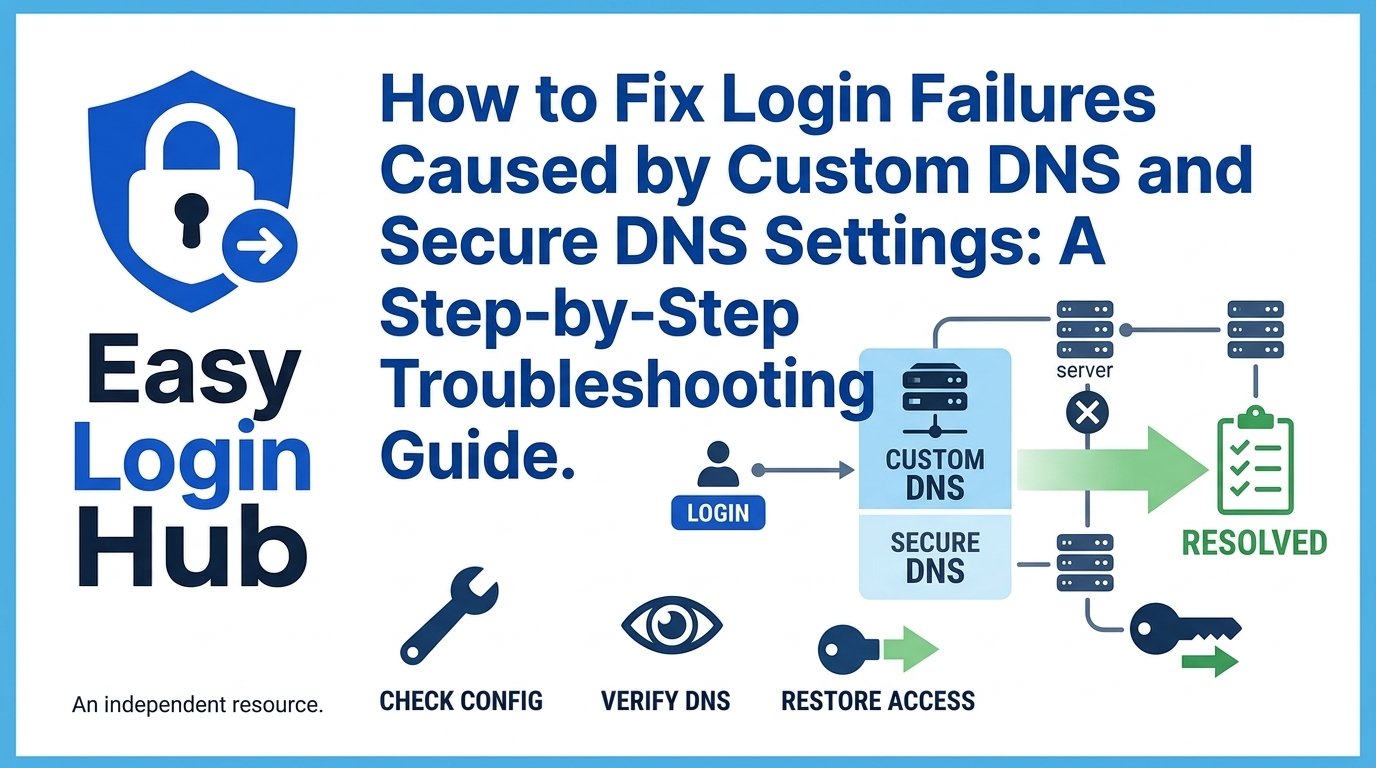
If you have manually configured custom DNS servers (such as Google DNS, Quad9, or Cloudflare) on your computer or phone, your device will attempt to resolve domain names globally rather than through the local router server. To resolve this issue, restore your settings to retrieve DNS details automatically from the local network.
On Windows:
- Open Settings > Network & internet > Wi-Fi.
- Click on Hardware properties or your connected network name.
- Under DNS server assignment, click Edit.
- Change the setting from Manual to Automatic (DHCP) and save changes.
On macOS:
- Open System Settings > Network > Wi-Fi.
- Click Details next to your current Wi-Fi network.
- Select the DNS tab on the left sidebar.
- Select any manual DNS server entries listed in bold and click the minus (–) button to remove them, allowing the default local router DNS to populate. Click OK.
On Android and iOS:
- iOS: Go to Settings > Wi-Fi, tap the i icon next to the network, tap Configure DNS, and select Automatic.
- Android: Go to Settings > Network & Internet > Private DNS and set it temporarily to Off or Automatic.
4. Clear the Operating System DNS Cache
A corrupted or outdated local DNS cache can prevent your browser from locating the captive portal server address even after changing settings.
- Windows: Open Command Prompt or Terminal, type
ipconfig /flushdns, and press Enter. - macOS: Open Terminal, enter
sudo dscacheutil -flushcache; sudo killall -HUP mDNSResponder, press Enter, and supply your administrator password. - Chrome Browser Short Cut: Type
chrome://net-internals/#dnsinto Chrome’s address bar and click Clear host cache.
5. Forget the Wi-Fi Network and Reconnect
Network details previously cached by your device can create IP address leasing conflicts. Clearing stored credentials forces a complete handshake attempt with the local access point.
- Navigate to your device’s Wi-Fi network list.
- Select the network name (SSID) and click Forget Network or Remove.
- Turn off your device’s Wi-Fi radio, wait 10 seconds, and turn it back on.
- Select the network again from the list to initiate a clean connection request.
6. Access the Default Gateway Address Directly
If automatic browser redirection fails entirely, you can manually type the router address into your browser address bar to reach the login page directly.
- Find your current default gateway IP address via your device network status screen (commonly
192.168.1.1,192.168.0.1,10.0.0.1, or1.1.1.1). - Open a browser tab, type
http://followed by that gateway address (e.g.,http://192.168.1.1), and press Enter.
Summary Troubleshooting Table
| Issue Symptom | Primary Cause | Recommended Fix |
|---|---|---|
| Browser shows SSL / Certificate Error | HTTPS forced on captive portal redirect | Visit http://neverssl.com in your browser. |
| Wi-Fi connected, no internet pop-up appears | Active VPN or custom DNS blocking local router | Turn off VPN; set DNS server assignment to Automatic (DHCP). |
| Redirect loop or stuck loading wheel | Corrupted browser cookies or old network session | Clear browser cache or open an Incognito / Private tab. |
Security Considerations When Using Public Wi-Fi Portals
While public wireless networks offer convenience, they carry inherent security risks since network traffic can be intercepted by unauthenticated actors sharing the same spectrum.
- Verify Network Names: Ensure you are connecting to the legitimate network provided by the venue, avoiding similarly named unauthorized networks (“evil twins”).
- Enable Your VPN After Login: As soon as you clear the captive portal and secure basic network access, immediately turn your VPN back on to encrypt outgoing communications.
- Avoid Sensitive Transactions: Postpone handling confidential online banking or critical account adjustments over public connections without active end-to-end encryption.
For detailed step-by-step instructions on securing personal accounts and managing online credentials across various digital platforms, refer to the extensive library of login guides available on EasyLoginHub. If an underlying network glitch locks you out of an online account entirely during travel, exploring specialized account recovery assistance strategies can help restore access smoothly.
Disclaimer: Easy Login Hub is an independent informational resource providing technical access information, standard network troubleshooting steps, and educational guides. EasyLoginHub is not affiliated with, endorsed by, or partnered with any third-party software developers, hardware vendors, or public internet providers mentioned in this Login Guide.
Frequently Asked Questions (FAQ)
Why does my smartphone say “Connected without Internet” on public Wi-Fi?
This message indicates that your phone successfully connected to the wireless router, but the router has not yet granted external internet access. This usually happens because you have not yet completed the captive portal splash page requirements or because custom DNS settings on your phone are blocking the local router gateway interface.
Is it safe to visit an unencrypted HTTP page like neverssl.com?
Yes. Web pages like neverssl.com are designed specifically to force network redirects without collecting sensitive information. Because no personal data or passwords are requested on that site, unencrypted HTTP transmission poses no privacy risk during that specific step.
What should I do if the captive portal loads as a blank white page?
If the captive portal loads blank, your browser’s ad blocker or JavaScript blocker may be stopping required interactive elements from rendering. Temporarily disable content blockers, switch to a clean private browsing window, or try opening the page in an alternative browser engine like Safari, Edge, or Chrome.